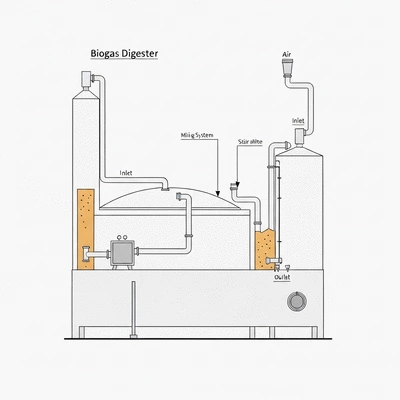
Biogas Digester Process Flow
1
Feedstock
(Manure, Crop Residues)
➜
2
Digestion Chamber
(Anaerobic Process)
➜
3
Biogas Production
(Methane for Energy)
➜
4
Digestate
(Nutrient-Rich Fertilizer)
Subscribe to receive the latest insights on biogas technology and how to turn organic waste into sustainable energy.
Posted on: 2025-12-27
By: Liam Hargrove
As you consider the future of farming, think about this: What if the waste your farm generates could be transformed into a powerful energy source? This is the promise of biogas digesters—a solution that not only addresses waste management but also paves the way for sustainable energy independence.
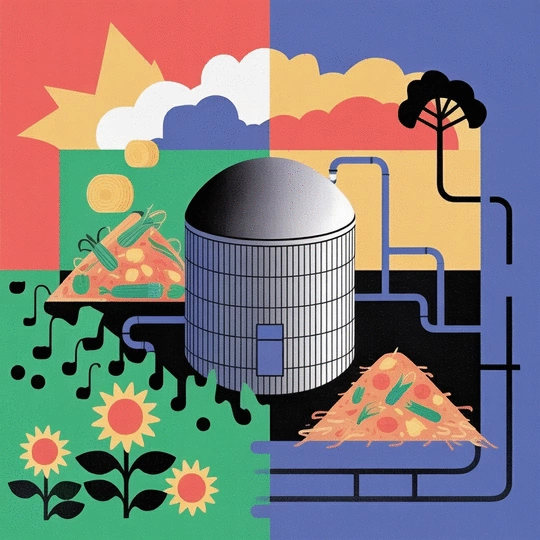
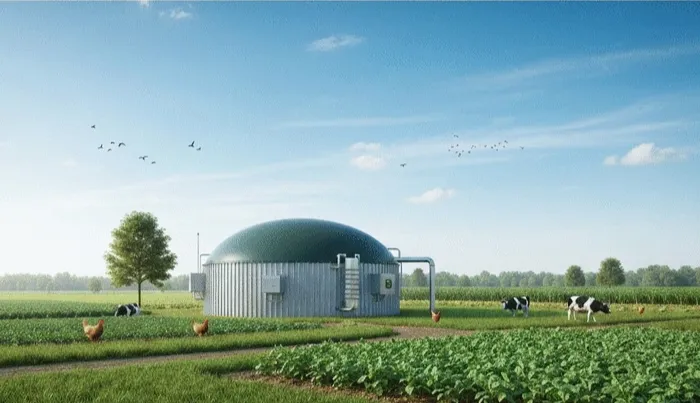
This visual illustrates the process flow of a biogas digester and highlights its key benefits for sustainable agriculture.
Feedstock
(Manure, Crop Residues)
Digestion Chamber
(Anaerobic Process)
Biogas Production
(Methane for Energy)
Digestate
(Nutrient-Rich Fertilizer)
As a passionate advocate for renewable energy solutions at Biogas Digester World, I often get asked about the practicality of biogas digesters for small farms. So, what exactly is a biogas digester? Simply put, it's a system designed to break down organic waste using natural decomposition processes to produce biogas. This gas, primarily composed of methane, can be harnessed for heating, cooking, or generating electricity. Imagine turning your farm's organic waste—like crop residues and livestock manure—into a valuable energy source! How cool is that?
A biogas digester operates through a process called anaerobic digestion, where microbial organisms break down organic materials in the absence of oxygen. This process occurs in a sealed tank, where the organic waste is stored. The generated biogas is collected and can be used immediately or stored for later use. Here are some key components of a biogas digester:
Understanding how these components work together is crucial for anyone considering a biogas solution for their farm. By managing these elements effectively, you can maximize biogas production! For more detailed information on biogas processes, you can refer to resources from the European Biogas Association.
Anaerobic digestion is a game-changer for sustainable farming! It not only reduces waste but also transforms it into renewable energy. By utilizing organic waste, farmers can significantly decrease their carbon footprint and contribute to a more sustainable agricultural system. Here are some of the most impactful roles anaerobic digestion plays:
With practices like anaerobic digestion, farmers can tackle both waste management and energy needs, leading to a more resilient agricultural system!
Implementing a biogas digester can be a transformative step for small farms. The benefits are numerous and can significantly impact your operations. Some of the key advantages include:
By integrating a biogas digester into your operations, you not only manage waste effectively but also align your farming practices with sustainable goals. It's a win-win! The U.S. biogas industry, for example, has seen significant growth, demonstrating the increasing adoption and benefits of these systems, as highlighted by the American Biogas Council.
The environmental benefits of biogas systems extend beyond just waste management. By converting organic waste into energy, biogas digesters actively contribute to reducing greenhouse gas emissions. Let's take a closer look at the environmental impacts:
Embracing biogas technology at small farms not only promotes sustainability but also supports a healthier environment for future generations. Together, we can make a difference!
To maximize the efficiency of your biogas digester, consider mixing different types of feedstock. Combining materials like manure with crop residues can enhance microbial activity and improve gas production. Experimenting with the right mix can lead to more effective waste management and increased energy yield for your farm!
As we look toward the future of renewable energy, it’s essential to consider the role that biogas digesters can play in small farming operations. While there are many clear benefits, it's also vital to weigh the pros and cons. Is investing in a biogas digester the right choice for your farm? Let's dive into this crucial question!
Understanding the specific needs of your operation is key. Factors like the type of organic waste you generate, your energy consumption patterns, and your long-term sustainability goals all play a role in this decision. Here are some benefits to consider:
However, potential challenges exist too. For instance, initial installation costs and ongoing maintenance can be daunting. I always encourage farmers to weigh these factors seriously before making a commitment.
Biogas digesters are not just about energy—they're a powerful tool in the fight against climate change. By converting organic waste into energy, we can significantly reduce greenhouse gas emissions, especially methane, which is notably potent. It’s exciting to think about the positive impact we can make together!
When we utilize biogas technology effectively, we’re creating a closed-loop system that not only benefits our farms but also the broader environment. Here are some notable environmental benefits:
As we consider the future of farming, integrating biogas into our practices can help pave the way for sustainable agriculture. Together, we can work towards a more resilient and responsible farming landscape! Data and trends from the EPA AgSTAR program further illustrate the positive impact of biogas systems on environmental sustainability.
Now that we’ve explored the potential of biogas, it's time to think about how to make it happen on your farm. The journey toward implementation can be exciting, but it requires careful planning and the right resources. Let’s break down some essential steps you can take!
When considering a biogas digester, it’s crucial to assess the feasibility of such a system for your specific situation. I recommend starting with these resources:
Using these tools will help you understand your farm's unique needs. By gathering this data, you can make informed decisions that align with your energy goals.
Don’t underestimate the power of community! Connecting with fellow farmers who have implemented biogas solutions can provide invaluable insights. Here are some ways to network:
Sharing experiences can ease your journey and allow you to learn from others' successes and challenges. We’re all in this together, and the more we collaborate, the better our outcomes will be!
Continuing education is vital in the ever-evolving world of renewable energy. Participating in workshops focused on biogas can equip you with the knowledge you need. Look for opportunities such as:
These workshops not only enhance your understanding but also inspire you to take action! At Biogas Digester World, we’re passionate about empowering farmers through education, so I encourage you to seek out these opportunities!
Here are some common questions about biogas digesters and their application in small-scale farming:
As we wrap up our discussion on biogas digesters, I hope you feel inspired to consider how these systems can transform your farm. The potential for energy independence and sustainable practices is too great to ignore!
Every small step towards sustainability counts. By adopting biogas technology, you’re contributing to a larger movement aimed at reducing waste and promoting renewable energy. Let’s encourage each other to make the right choices for our farms and the environment.
If you’re ready to make a change, take the next step! Research the biogas options available for your farm, connect with local resources, and don’t hesitate to reach out to experts in the field. Together, we can harness the power of organic waste to create a more sustainable future!
Lastly, consider how biogas can integrate into your Community Supported Agriculture (CSA) initiatives. By promoting renewable energy practices, you not only enhance your brand but also inspire your community to embrace sustainability. Let’s make biogas a part of our narrative as we work towards a greener tomorrow!
Here is a quick recap of the important points discussed in the article: